Part III—Reclaiming the ‘Top Forty’
PREVIOUSLY: Part II—The Changing Face of the Charts in the 1950s includes the earliest tensions between the music of Tin Pan Alley and that of rock ‘n roll.
For the means of this paper, when referring to songs, we will be referring to the basic melody and lyrics and not the original singer on the original Broadway cast recording. Even dating back to the early years of the ‘Top 100,’ singers outside of the world of the show were the ones to cover hit songs. In 1956, for example, The Four Lads covered Frank Loesser’s “Standing on the Corner” from that year’s The Most Happy Fella, not the four actors who sang it in the show (Bronson 2007 330). It came in at #22 on the biggest songs of 1956. This trend has several notable exceptions. Barbra Streisand, for example, made her Billboard debut in 1964 with the single “People” from the musical Funny Girl, a show which served as a star-maker for her. Another instance when the stars of a show sang their own songs for the single version was Grease in 1978. The soundtrack from the movie version of the stage play took the charts by storm. Three singles—“You’re the One That I Want,” “Hopelessly Devoted,” and “Summer Nights”—were lifted straight from the movie and featured John Travolta and Olivia Newton-John. In short, covering a musical theatre song is nothing new, and with few exceptions, it is the only way musical theatre songs are able to chart at all.
Though dozens of musical theatre songs have landed on the ‘Top/Hot 100’ between 1956 and the present, only seven have successfully reached the pinnacle and charted #1. Examining these seven points within the galaxy of songs, the constellation reveals two major findings. First, the sampling reveals a shift in song form from the ‘Tin Pan Alley’ form to ‘pop’ form. Secondly, the sampling reveals the shifting relationship with rock music.
The first musical theatre song within the lifespan of the ‘Top/Hot 100’ was “Smoke Gets in Your Eyes.” The Jerome Kern and Otto Harbach song—originally for the 1933 stage production of Roberta—received a new treatment by The Platters in 1959. Incidentally, throughout Jerome Kern’s life, he resisted any ‘jazzifying’ of his own songs, preferring they be performed as originally conceived. It comes as no surprise that Mr. Kern’s widow was opposed to the new recording and even sought an injunction against it. The recording, however, revived a tired song from two decades prior. The Platters themselves were a vocal quintet of international acclaim, and their rendition of “Smoke Gets in Your Eyes” exemplified the crooner aesthetic. Even Mercury Record executive Art Talmadge wanted the group to record more modern material—novelty songs like Bob Gaudio’s “Short Shorts” was hitting the charts—instead of old standards (Bronson 2003 48).
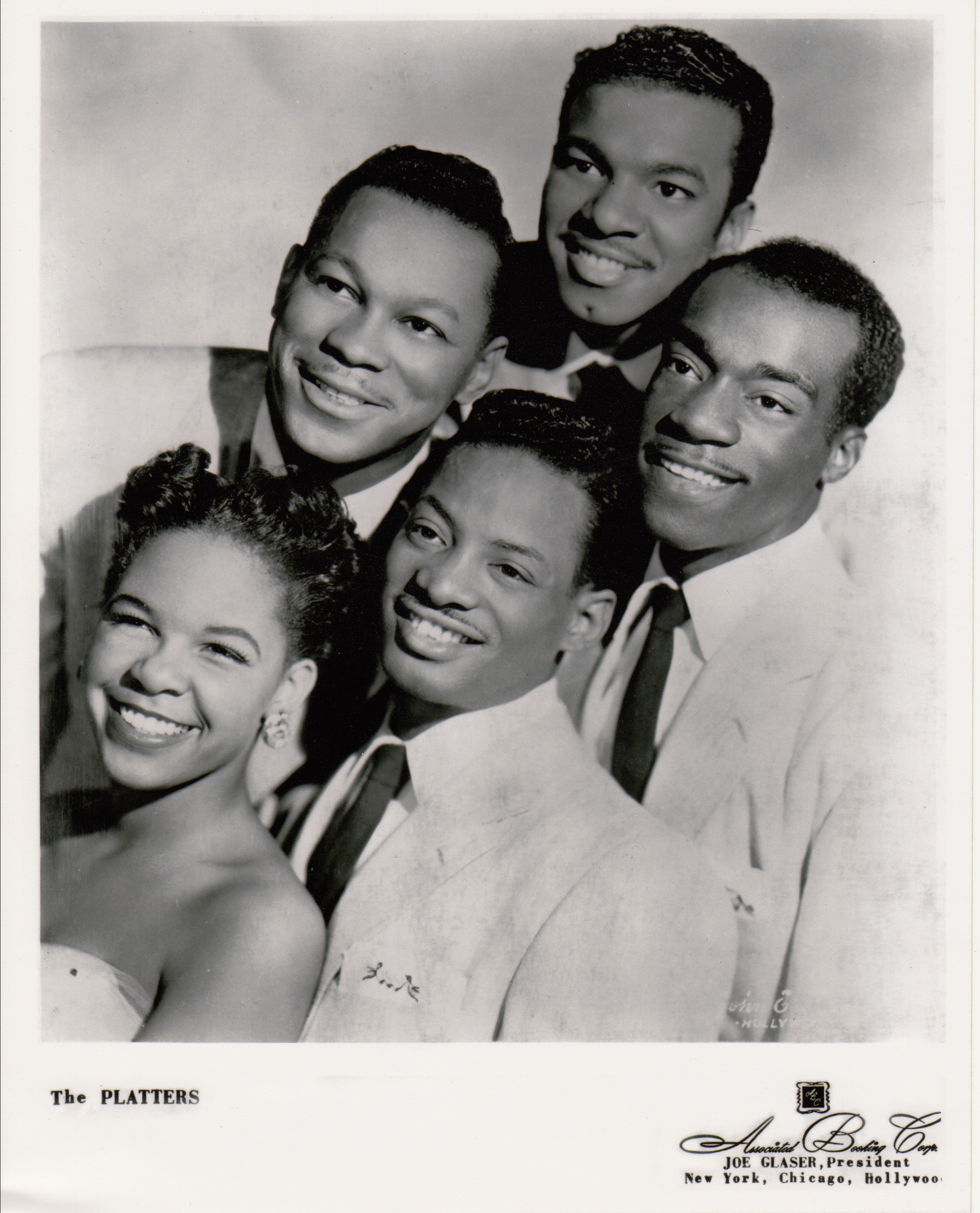
The Platters revived the old Kern and Harbach tune “Smoke Gets In Your Eyes” from Roberta.
In terms of song form, “Smoke Gets in Your Eyes” was old-fashioned. It employed a standard ‘Tin Pan Alley’ form of AABA. This structure begins with a simple melody—usually eight bars in length—and then repeats that melodic material with slightly different lyrics. These sixteen measure (AA) comprise the first half of the AABA form. With the B section—sometimes called the ‘bridge’ in Tin Pan Alley parlance—comes new melodic material and lyrics. After that, the A section returns with new lyrics and brings the song to a climax and resolution. The whole structure usually totals 32 measures of music, hence providing the basis for the standard 32-measure audition cut. This song form was in its prime when Roberta premiered on Broadway in 1933, though it was still popular thanks in part to crooners of the Forties and Fifties like Bing Crosby, Frank Sinatra, and Dean Martin. “Smoke Gets in Your Eyes” stayed three weeks at #1 in 1959.
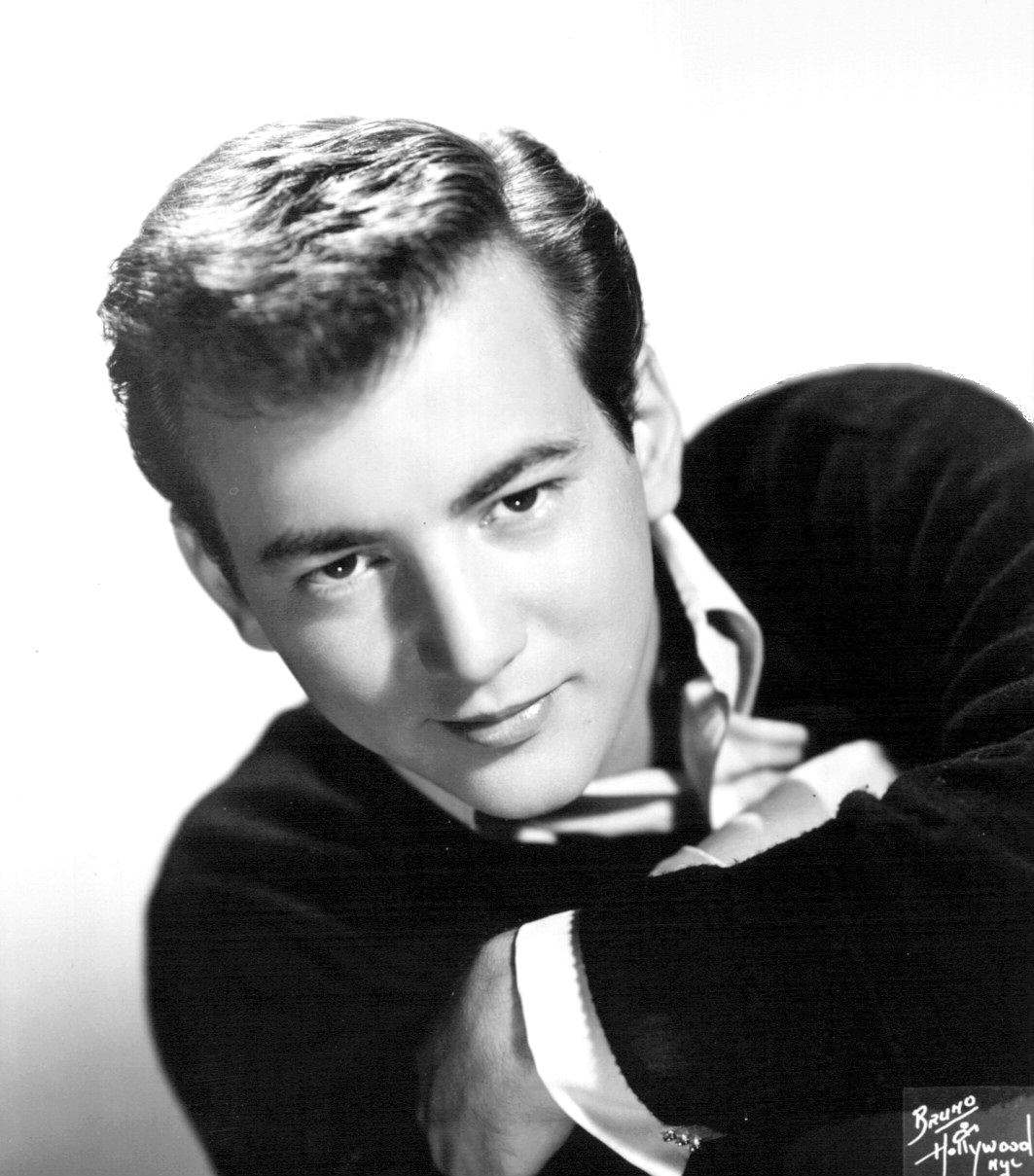
Bobby Darin recorded a new version of “Moritat” from The Threepenny Opera called “Mack the Knife.” Its enjoyed abundant success in 1959.
Later that year, another decades-old musical theatre song enjoyed a nine week-long stint in the #1 spot: “Mack the Knife” recorded by Bobby Darin. In fact, both the source material and the song form employed for “Mack the Knife” are older than in the case of “Smoke Gets in Your Eyes.” Rather than the Tin Pan Alley style, “Mack the Knife” is strophic: the song employs the same melody for each verse as a church hymn might do. The treatment of the tune is very much in the crooner aesthetic, and the orchestrations employ a big band swing style.
Though the The Threepenny Opera—written in 1928 by Kurt Weill and Bertholt Brecht—enjoyed a brief run on Broadway in 1933, the popularity of The Threepenny Opera in the Fifties was in part due to the 1954 Off-Broadway revival with a new translation by Marc Blitzstein. In 1956, The Dick Hyman Trio recorded a version of “Moritat” that came in at #48 for the year. Bobby Darin styled his version of “Moritat” after a recording by Louis Armstrong and featured the new Blitzstein lyrics. The song—now known as “Mack the Knife”—not only lasted nine weeks at number one and claimed the number one spot for 1959, but it also has the distinction as the number one musical theatre song in Billboard’s history (Bronson 2007 303).
Following “Mack the Knife,” Broadway would have to wait five years before another musical theatre song would top the charts. Rock ‘n’ roll had established itself in the realm of American popular music, and the musical landscape was changing. The early Sixties brought groups like The Four Seasons who broke onto the scene with “Sherry” in 1962, “Big Girls Don’t Cry” later that year, and “Walk Like a Man” in 1963. The charts in 1962-63 also brought girl groups in the do-wop style like The Shirelles with “Soldier Boy”, The Crystals with “He’s a Rebel”, and The Chiffons with “He’s So Fine.” But one of the most significant musical events in the early Sixties was the British Invasion.
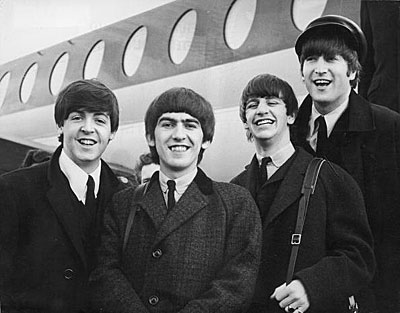
The Beatles had a profound effect on the placement of musical theatre songs on the pop charts.
The Beatles popularity exploded in the United States with the release of “I Want to Hold Your Hand.” Though the US release was originally scheduled for January 13, 1964, disc jockeys who obtained copies from Britain thanks to the earlier UK release created a clamor for their music, and executives moved the US release to December 26, 1963. According to Billboard’s Fred Bronson, “The importance of ‘I Want to Hold Your Hand’ cannot be overestimated. Next to ‘(We’re Gonna) Rock Around the Clock,’ it is the most significant single of the rock era, permanently changing the course of music” (2003 143). In terms of numbers, their breakout song lasted seven weeks at #1. Their second single, “She Loves You,” took the spot in the two weeks after that. Their third single, “Can’t Buy Me Love,” assumed the top slot in the five weeks following. It is, therefore, incredibly remarkable that for the week of May 9, 1964, The Beatles reign at the top of the charts was briefly interrupted by jazz trumpeter Louis Armstrong with his smash hit recording of the title song from the Broadway musical Hello, Dolly!
UP NEXT: Part IV— Broadway Tastes Rock Music points out the fluke of “Hello, Dolly!” and the first instance of Broadway rock music topping the charts.
All research conducted by Bradley J. Behrmann at San Diego State University (SDSU) and submitted on December 11, 2014. Findings presented at the Student Research Symposium at SDSU on March 6, 2015. Subsequent presentation at the Musical Theatre Educators’ Alliance Conference at Western Australia Academy of Performing Arts in Perth, Australia on June 22, 2015. Bibliography published in final installment.

 7 1/2 Cents: Musings on Musical Theatre